EEG

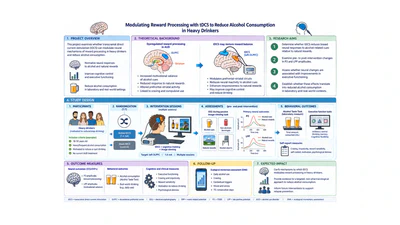
Modulating Reward Processing with tDCS to Reduce Alcohol Consumption in Heavy Drinkers featured image

Modulating Reward Processing with tDCS to Reduce Alcohol Consumption in Heavy Drinkers

Testing whether excitatory tDCS over the left DLPFC can rebalance neural reward processing in heavy drinkers—reducing biased responses to alcohol cues, enhancing responsiveness to …

avatar
Dr. Jorge Martins
•
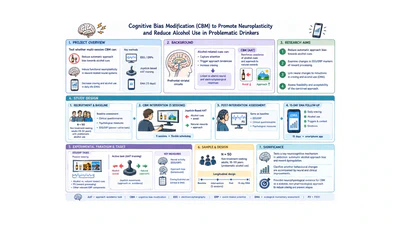
Cognitive Bias Modification (CBM) to Promote Neuroplasticity and Reduce Alcohol Use in Problematic Drinkers featured image

Cognitive Bias Modification (CBM) to Promote Neuroplasticity and Reduce Alcohol Use in Problematic Drinkers

Testing whether multi-session Cognitive Bias Modification can drive functional neuroplasticity in reward-related neural systems and reduce automatic alcohol-approach bias, craving, …

avatar
Dr. Jorge Martins
•
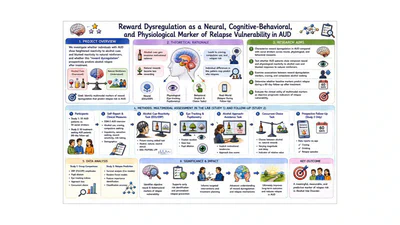
Neural Markers of Reward Dysregulation in Alcoholism Relapse Prediction featured image

Neural Markers of Reward Dysregulation in Alcoholism Relapse Prediction

This project aims to identify neurobiological and cognitive-behavioral markers of alcohol use disorder (AUD) and evaluate their utility for predicting relapse after treatment. The …

avatar
Dr. Jorge Martins
•
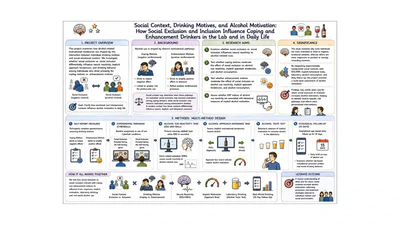
Social Context, Drinking Motives, and Alcohol Motivation featured image

Social Context, Drinking Motives, and Alcohol Motivation

Examining how social exclusion and social inclusion shape neural alcohol cue reactivity, implicit approach tendencies, laboratory alcohol consumption, and 15-day daily drinking as …

avatar
Dr. Jorge Martins
•
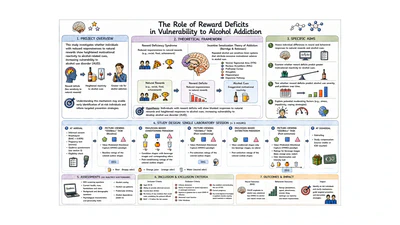
The Role of Reward Deficits in Vulnerability to Alcohol Addiction featured image

The Role of Reward Deficits in Vulnerability to Alcohol Addiction

Investigating whether individual differences in reward processing deficits contribute to vulnerability to alcohol addiction by increasing susceptibility to incentive salience …

avatar
Dr. Jorge Martins
•